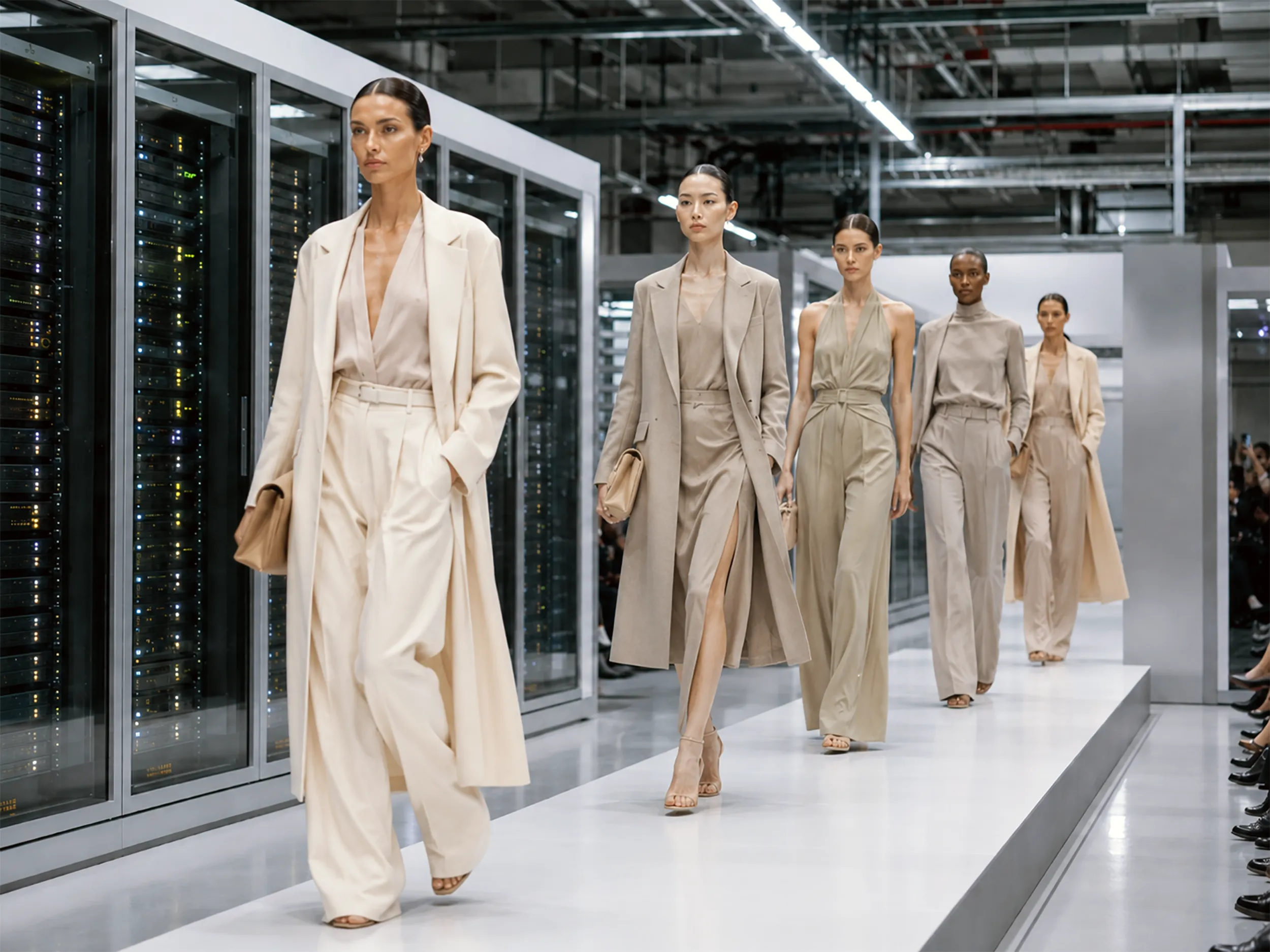

The fashion industry is gaining new capital, but losing control over its own symbolic order. What appears to be sponsorship is shifting the question of who gets to confer cultural status at all.
For a long time, the fashion industry understood itself as an autonomous cultural apparatus. It decided what became visible, who gained access, and which brands or bodies counted as contemporary. This order was never independent of money, but it could translate money into taste. That act of translation is now becoming fragile. When tech billionaires appear at the Met Gala not merely as eccentric guests, but as financiers and strategic actors, the relationship between capital and cultural recognition shifts. This is no longer about the rich consuming fashion. It is about platform power refining itself culturally through fashion.
Prestige as a second currency
The current debate around tech billionaires in the orbit of the Met Gala is more than a matter of personalities. Jeff Bezos did not appear there simply as another billionaire within the fashion system. His proximity to the event and the visible presence of tech wealth show how far the red carpet has become a stage for industrial power. Mark Zuckerberg, too, stands as an example of this movement: tech elites are not using fashion as a stylistic correction, but increasingly as a cultural recoding of their public role.
For these actors, fashion is not a side issue. It offers something that technical dominance alone cannot produce: aura. Tech companies control communication spaces and the infrastructure of digital creativity. Yet their cultural image often remains functional or aggressive. Fashion works differently. It produces belonging and historical depth. Whoever is admitted into this space acquires not only clothing, but symbolic legitimacy. Their status shifts from operator of technical systems to a figure of cultural distinction.
The Met Gala is particularly suited to this function because it organises fashion as a global media image. Its red carpet is more than an event format; it is a global machine of legitimation. That wealth from the tech sector should become more visible here follows the logic of an industry seeking public acceptance while its own platforms face growing political and social criticism. Fashion provides an image system that does not function decoratively here, but strategically.
Fashion’s dependency
The fashion industry cannot simply dismiss this rapprochement as an external takeover. It is itself part of the problem. Luxury brands and magazines depend on reach and external capital. Traditional advertising markets carry less weight, while cultural visibility becomes ever more expensive. Big Tech does not step into this gap as a neutral sponsor, but as an actor with interests of its own.
This creates an asymmetrical relationship. Fashion gains short-term money and proximity to digital elites. Big Tech gains something harder to measure: cultural softening. The billionaire who otherwise appears as a symbol of monopolistic platform power suddenly stands between couture and philanthropy. That does not change his economic role, but it changes the visual order through which that role is perceived.
This is precisely where fashion’s weakness lies. It can speak with great precision about aesthetics and bodies, but often only vaguely about power. Its critical vocabulary remains aesthetic, while its structural dependency is economic. The more the fashion industry becomes dependent on tech money, the harder it becomes to criticise tech power seriously. The industry does not lose its voice immediately. But it learns which subjects it must treat more quietly.
Indie designers as a fig leaf
What is especially revealing is that tech actors do not stage their new presence in fashion only through major luxury brands. Some appear with independent designers, shifting the image away from the corporation and towards a controlled proximity to the creative scene. At first glance, this looks more sympathetic. Young labels receive visibility, while tech executives appear as patrons of individual design. Yet this gesture is also ambivalent.
Independent fashion becomes a cultural correction surface for a highly concentrated industry. The investor or platform chief does not merely dress differently. He appropriates a narrative of creativity and risk. This creates a proximity between the start-up myth and the designer’s studio that is politically convenient. Both appear as creative individual actors, even though the power relations behind them are entirely different.
For fashion, this is dangerous because it gives away its most critical energy precisely where it might still be credible: among smaller labels and experimental forms. When these positions become image surfaces for tech elites, the very idea of independence loses definition. Visibility then does not merely replace support. It also defines what is considered worthy of support.
The new cultural power
Big Tech does not need to take over the fashion industry in order to change it. It is enough to occupy the interfaces where cultural events are translated into digital visibility. The power lies not in owning a fashion house, but in the ability to organise attention and distribute cultural relevance. In precisely this respect, Big Tech is already superior.
Historically, fashion derived its authority from selection. It could exclude and charge things with meaning. Platforms also select, but according to criteria of reach and economic usability. When this logic seeps into fashion, it changes more than marketing. It changes what counts as success in the first place. A dress then matters less as a design than as a trigger for image circulation.
This explains why the connection between tech and fashion does not end with the appearances of prominent actors. It concerns the production conditions of cultural meaning. Whoever controls the infrastructure of visibility inevitably becomes relevant to industries whose value depends on public attention. Fashion can be outraged by this. But it can hardly ignore it.
The question of whether Bezos or Zuckerberg have taste is irrelevant. What matters is whether fashion can still determine what cultural status means when its bearers increasingly come from an economy that manages attention industrially. Big Tech is not buying into fashion because it needs fashion. It is buying in because fashion still provides what platforms cannot fully produce by themselves: cultural recognition with history.